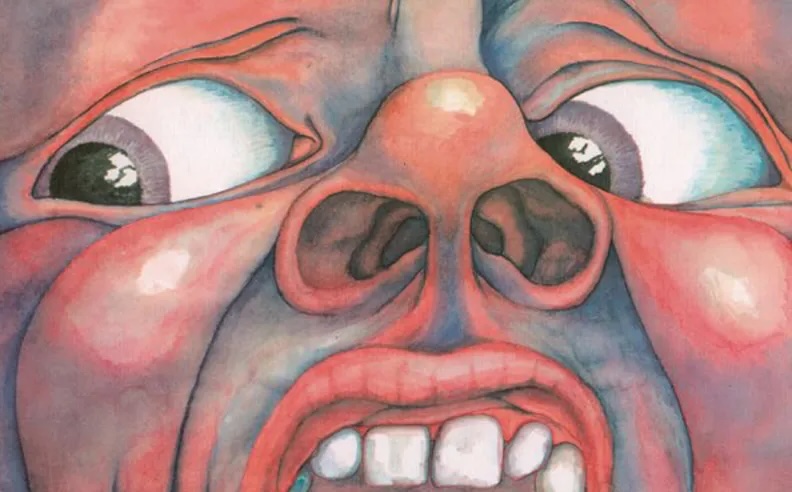
The most spectacular insult I ever received in my life was “your nostrils are so big that when you tip your head back, the room goes dark.” I had to give the guy props for inventiveness.
Until I was a senior in high school, I rarely thought about how I looked, despite abundant evidence that I was not widely perceived as pretty. No one ever told me I was pretty. I even remember a guy saying “God, you’re ugly” when I smiled at him in class. But I had boyfriends and was even cast as a romantic lead in a play as opposed to third gargoyle on the left. I guess I thought I looked just fine. I was told I was intellectually gifted and creatively talented and that always seemed to be enough.
So what changed? I came home after a play in which I had the lead role of a governess. I wore a beautiful blue costume, a lovely updo, and a full face of makeup. My mother took a long look at me and said, “You look kind of pretty with a little makeup on.”
I no longer blame my mother, even though it was an objectively shitty thing to say. She probably had never been told she was pretty, and she didn’t think she was, which always floored me. My mother was BEAUTIFUL. What bothered me most was not learning that my own mother didn’t think I was pretty. It was realizing that pretty mattered—and that I apparently did not possess what mattered.
After that it mattered a whole lot. Makeup became a permanent fixture on my face. My conviction in my own plainness was compounded when a man with whom I had an unfortunate liaison, seeing me bare-faced fresh out of the shower, said, “Is this what you really look like?”
I never saw him again. I don’t remember if he dumped me for my beauty deficits or I dumped him for his character deficits.
What strikes me still is how fast it happened—one sentence from my mother, and seventeen years of not caring evaporated. Not a slow erosion. A single crowbar to the gut. And then another from some random man.
As a therapist, I have sat with hundreds of women carrying the same wound. I don’t remember the first moment I recognized myself in a client, but there is a real challenge in treating something you haven’t fully resolved in yourself. They routinely describe their faces and bodies with a level of contempt not even directed at their worst enemies. Weight is by far the most common obsession, although aging runs a close second. Then come the inventories: jawlines, eyelids, necks, stomachs, wrinkles, upper arms, breasts migrating southward like retirees to Florida.
Nostril size seems not to be a major problem.
I remember having a conversation with my former graduate school advisor, who taught a brilliant women’s studies class. She said she saw nothing wrong with women adorning themselves—with makeup, hair dye, clothing, and jewelry. But if adornment becomes the only bridge to worthiness, it turns dark.
That adviser, whom I adored, never wore a lick of makeup.
When a woman decides, like Pamela Anderson, to go facially commando, it is a real risk. I admire the bravery, although if I looked like PA, I might feel more emboldened. I know that my discomfort in my own unvarnished face is ultimately my issue, but I also know that I share this issue with many others. Women are often praised for courage when they stop trying to meet the very standards they were punished for failing in the first place.
Catch-22, anyone?
Makeup, Botox, fillers, even surgery: it’s hard to walk away from things the world keeps rewarding. It’s scary to give up the shield. Just as everyone else has become accustomed to our faces with all the bells and whistles, so have we.
Like my former adviser, I am not saying we shouldn’t enjoy dolling ourselves up now and again. But I do bemoan how deeply it has been internalized and normalized as an entry fee for visibility, approval, and desirability.
We live in an attention-addicted society. Likes, loves, comments, and views on social media all provide squirts of dopamine. Being told you are pretty, beautiful, or that “you don’t look your age” is street-drug level validation. Fading into wallflower oblivion can feel like a fate worse than death in a culture that treats visibility as proof of worth.
I doubt I’ll ever be completely cured of wanting to be thought attractive. If someone tells me I look good, I still enjoy hearing it. If someone tells me I don’t look my age, I won’t actually file a complaint. But the older I get, the less interested I am in spending my finite time brokering a truce with my mirror.
Because when we stop caring if anyone notices our prettiness, we can stop caring if they notice our lack thereof.
You can even make peace with your room-darkening nostrils. And that’s nothing to sniff at.
 Kvetchin With Gretchen