
In My Therapy Chair, I see a Nation in Grief

Between January 1st and 31st of 2026, approximately eight people were either shot by I.C.E. agents or died in I.C.E. detention. Renee Nicole Goode and Alex Pretti were killed in broad daylight. The others—Luis Gustavo Núñez Cáceres, Geraldo Lunas Campos, Víctor Manuel Díaz, Parady La, Luis Beltrán Yáñez–Cruz, and Heber Sánchez Domínguez, died in custody. It is sickening how quickly tragedies like these are flattened into headlines, speculation, and political sound bites. But before their names are absorbed into background noise, it deserves to be spoken plainly: many lives have been ended senselessly and violently, and many more families are being pulled into irreversible grief.

For many Americans, especially those already living with fear, deaths like these are not abstractions or talking points. They live in the body. They sharpen existing dread. They confirm a growing sense that our safety is increasingly fragile.

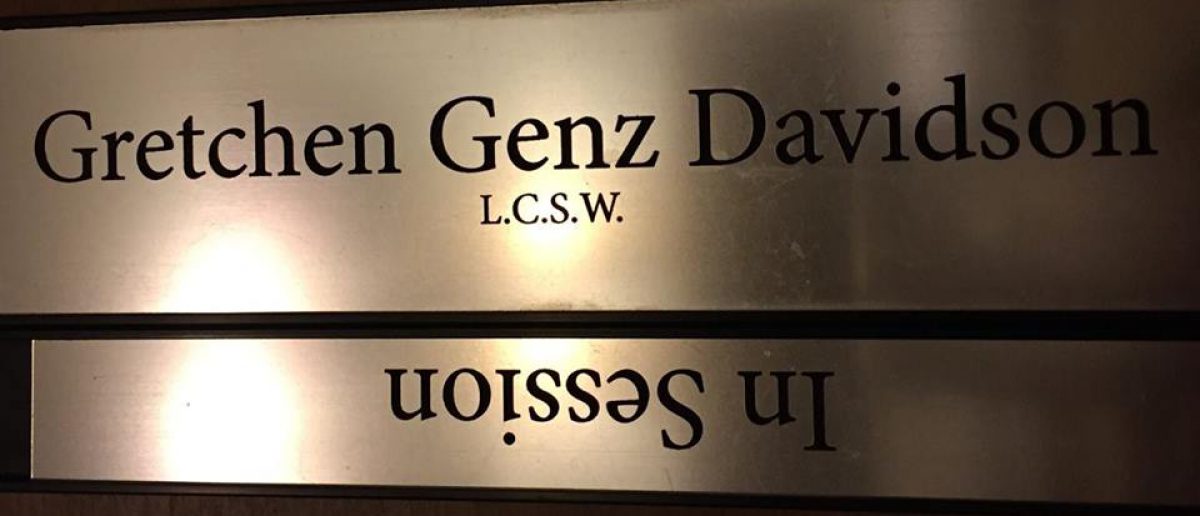
In my work as a therapist, I see how national events like this don’t remain “out there.” They follow people into the room with me, shaping what they fear, what they plan for, and how much of the future they feel able to imagine.

As a therapist in the Chicagoland area, I’m used to helping people navigate heartbreak, loss, and conflict. But since Trump was re-elected, our sessions have taken a darker turn. My clients aren’t just anxious about relationships—some are abjectly terrified of them or their loved ones being detained, deported, or silenced.

Therapy has now become a place where Americans process not just personal trauma, but national collapse.

I felt guilty for missing the No Kings rally on October 18, 2025 as well as several subsequent marches. They are often scheduled on Saturdays, and Saturdays are workdays for me. Therapists tend to work many evenings and weekends so we can see people who can’t come during the 9:00 – 5:00 hours.

The clients who sat across from me that day weren’t at the rally either, for many reasons: autoimmune disease, mobility issues, caretaking responsibilities—and, most painfully, fear of being targeted.

When my last client broke down in tears, terrified that she or her family might be detained, I realized my role that day wasn’t in the streets. It was in that chair, supporting those who live with fear every single day—people who sense the shadow of authoritarianism not just as a talking point, but as a daily threat.

Born and raised in Chicago, she told me she now fears walking her dog in her own neighborhood. One day, she saw a vehicle with darkened windows and men in face masks idling at the corner, and her body went numb with terror. Her nightmare is simple and devastating: being detained and her beloved dog left abandoned in the street—lost, alone, frightened, and at risk. I thought about my cats. What would happen to them if I were taken away without warning?

She also worries about her elderly father, a longtime U.S. citizen born in Mexico, who might be “disappeared” from the local drugstore parking lot—a common staging area for ICE—while picking up a prescription for her mother. We both paused, stunned that we were even having that conversation—in 2025, in a quiet college town just north of Chicago. Two Americans strategizing about how to keep a family member safe from his own government.

These are the conversations happening in therapy now. Where we once talked about family dysfunction, we now talk about national dysfunction.

I sat there, horrified. As a 70-year-old white woman, I’m not completely safe—but I am far safer than someone with nothing more than a Hispanic surname. My fear is cushioned by privilege, and I know it.

Some of my clients have reached a grim acceptance. They understand things may get worse before they get better. But they’ve chosen to stay—to live their lives, find moments of joy, and resist in the ways they can.

Others are still in denial. Some are furious. Many are bargaining, parsing headlines like tea leaves, debating what Democrats did wrong and what they could still fix.

Collectively, we’re grieving the country we thought we lived in—where decency and democracy once felt like birthrights, not privileges that could vanish overnight.

Many months ago, my aunt and I visited my hometown in the far west suburbs. Even in the 1950s and 60s, it had a large Hispanic population. My first big crush was on a boy named Fernando. We drove through the old neighborhoods, past the city pool and my grade school, before stopping at my grandparents’ house—the heart of my childhood.

The yard, once plain grass, is now alive with bushes, flowers, statues, and colorful pinwheels. A few cars sat in the driveway. I parked across the street and hopped out to take a couple of photos. As I snapped away, a woman jumped from one of the cars, demanding to know what I was doing. She looked Latina. My heart sank—I had frightened her. I went into explanation overdrive, offering my name, even my driver’s license, anything to prove I wasn’t a threat—just a sentimental old fool on a trip down memory lane. My aunt chimed in, offering my grandparents’ names and the dates they lived there. I described the layout of the rooms, still burned into my memory.

She relaxed eventually, and we chatted a bit. But as I drove away, I couldn’t shake the unease. I had scared her unintentionally—but she had every reason to be afraid. That anyone in this country lives like that—constantly vigilant, even on their own front lawn—is an indictment of what we’ve become.

I’m not as far along in my grief as some of my clients. I cycle through the stages: shock, anger, despair, fleeting hope. Some days I want to fight; others, I want to hide. But what’s hardest is realizing how much hatred was always here, hiding in plain sight, now emboldened by power. It’s abuse on a national scale—gaslighting raised to a governing principle.

I still feel guilty for not marching. But maybe being in my chair that day was its own form of resistance. Seven million Americans turned out for the second No Kings March—a surge from the first rally. Future marches will be even bigger.

And if I can’t be there, I’ll be here. Because the front lines aren’t only in the streets. They’re in classrooms, clinics, kitchens—and therapy rooms—where people are quietly helping one another stay grounded, stay human, and not surrender entirely to despair.

When people like the aforementioned are killed, through direct violence or abject abuse and neglect, the loss ripples far beyond the immediate circle of grief. It enters into all of us. My work now—our work—is to make room for that grief without letting it harden into numbness or fear. To bear witness. To help people hold on to the fragile, stubborn belief that this country can still choose something better than what it is becoming.

This essay was written in the days following the second No King’s rally but updated after the killing of Renee Nicole Good.
Fuck Pretty

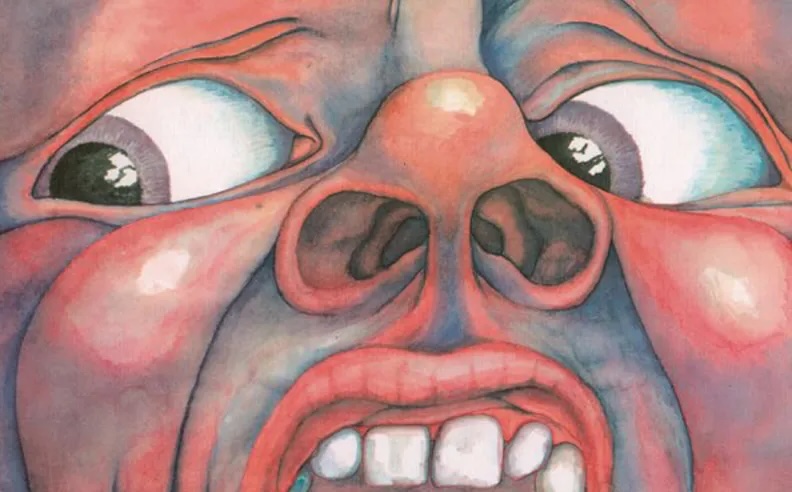
The most spectacular insult I ever received in my life was “your nostrils are so big that when you tip your head back, the room goes dark.” I had to give the guy props for inventiveness.

Until I was a senior in high school, I rarely thought about how I looked, despite abundant evidence that I was not widely perceived as pretty. No one ever told me I was pretty. I even remember a guy saying “God, you’re ugly” when I smiled at him in class. But I had boyfriends and was even cast as a romantic lead in a play as opposed to third gargoyle on the left. I guess I thought I looked just fine. I was told I was intellectually gifted and creatively talented and that always seemed to be enough.

So what changed? I came home after a play in which I had the lead role of a governess. I wore a beautiful blue costume, a lovely updo, and a full face of makeup. My mother took a long look at me and said, “You look kind of pretty with a little makeup on.”

I no longer blame my mother, even though it was an objectively shitty thing to say. She probably had never been told she was pretty, and she didn’t think she was, which always floored me. My mother was BEAUTIFUL. What bothered me most was not learning that my own mother didn’t think I was pretty. It was realizing that pretty mattered—and that I apparently did not possess what mattered.

After that it mattered a whole lot. Makeup became a permanent fixture on my face. My conviction in my own plainness was compounded when a man with whom I had an unfortunate liaison, seeing me bare-faced fresh out of the shower, said, “Is this what you really look like?”

I never saw him again. I don’t remember if he dumped me for my beauty deficits or I dumped him for his character deficits.

What strikes me still is how fast it happened—one sentence from my mother, and seventeen years of not caring evaporated. Not a slow erosion. A single crowbar to the gut. And then another from some random man.

As a therapist, I have sat with hundreds of women carrying the same wound. I don’t remember the first moment I recognized myself in a client, but there is a real challenge in treating something you haven’t fully resolved in yourself. They routinely describe their faces and bodies with a level of contempt not even directed at their worst enemies. Weight is by far the most common obsession, although aging runs a close second. Then come the inventories: jawlines, eyelids, necks, stomachs, wrinkles, upper arms, breasts migrating southward like retirees to Florida.

Nostril size seems not to be a major problem.

I remember having a conversation with my former graduate school advisor, who taught a brilliant women’s studies class. She said she saw nothing wrong with women adorning themselves—with makeup, hair dye, clothing, and jewelry. But if adornment becomes the only bridge to worthiness, it turns dark.

That adviser, whom I adored, never wore a lick of makeup.

When a woman decides, like Pamela Anderson, to go facially commando, it is a real risk. I admire the bravery, although if I looked like PA, I might feel more emboldened. I know that my discomfort in my own unvarnished face is ultimately my issue, but I also know that I share this issue with many others. Women are often praised for courage when they stop trying to meet the very standards they were punished for failing in the first place.

Catch-22, anyone?

Makeup, Botox, fillers, even surgery: it’s hard to walk away from things the world keeps rewarding. It’s scary to give up the shield. Just as everyone else has become accustomed to our faces with all the bells and whistles, so have we.

Like my former adviser, I am not saying we shouldn’t enjoy dolling ourselves up now and again. But I do bemoan how deeply it has been internalized and normalized as an entry fee for visibility, approval, and desirability.

We live in an attention-addicted society. Likes, loves, comments, and views on social media all provide squirts of dopamine. Being told you are pretty, beautiful, or that “you don’t look your age” is street-drug level validation. Fading into wallflower oblivion can feel like a fate worse than death in a culture that treats visibility as proof of worth.

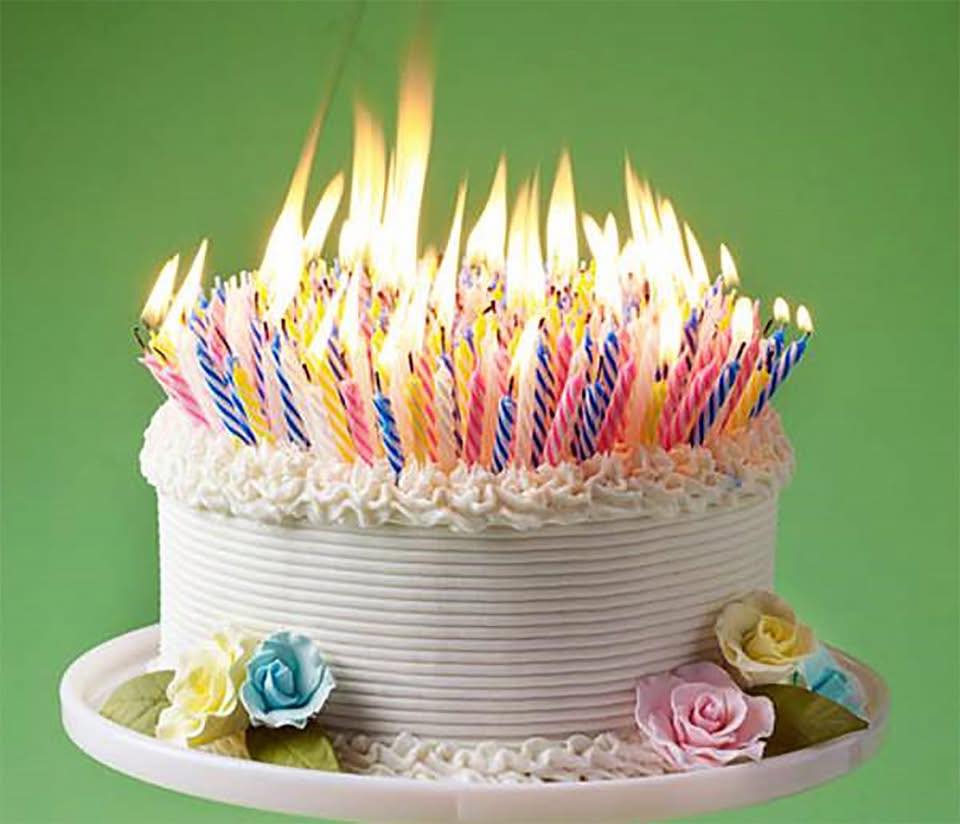
I doubt I’ll ever be completely cured of wanting to be thought attractive. If someone tells me I look good, I still enjoy hearing it. If someone tells me I don’t look my age, I won’t actually file a complaint. But the older I get, the less interested I am in spending my finite time brokering a truce with my mirror.

Because when we stop caring if anyone notices our prettiness, we can stop caring if they notice our lack thereof.

You can even make peace with your room-darkening nostrils. And that’s nothing to sniff at.

OH M GEE, I’M Seventy


As a young thing of 63, I wrote a top ten list of things I’d learned by that point.

But here I am standing just outside door 70, about to step into a whole new world. Turns out you CAN teach an old dog new tricks!

10)  Tweak your bucket list. Most people never do half that shit anyway and then feel bad about it. Aim for smaller moments of joy and satisfaction. If you haven’t skydived or hiked to Machu Picchu by 70, maybe find stuff to do that won’t put you in traction.

9)  “When you’re 20, you worry what everyone thinks, when you’re 40, you stop caring what everyone thinks, when you’re 60, you realize no one was even thinking about you.” I’d like to add “when you’re 70, you’re invisible, so do whatever TF you want.”

8)  It helps enormously to stop believing everything must change before you can be happy. Especially since we’re all living in a dystopian hellscape with great streaming services.

7)  Define yourself by what you love and not what you leave. Unless you cure cancer, of course. Then absolutely feel free to mention the hell out of it at cocktail parties.

6)  Looking young is nice, but actually being young is torture. I’ll swap the rollercoaster for the wrinkles any day.

5) People ask me if you ever get over grief. No, you don’t. It just becomes something you learn to live with, like the couch your cat scratched the hell out of.

4)  Erik Erikson said our final developmental stage is Generativity vs. Stagnation. Cooking, gardening, protesting or just fucking around and having fun (I’m very good at that one)—it all counts as generativity. Focus on what you CAN do instead of what you CAN’T because otherwise you’ll spend your remaining years rage-scrolling and ordering useless crap from Temu.

3)  I’ve learned that not only can’t I change others, but believing I could was borderline delusional. If you want to pay me professionally, I’ll gladly join Team Change, but you’ll be doing the heavy lifting. I’m exhausted.

2)  I’ve learned to cultivate the most important relationship I’ve ever had: the one with myself. I don’t fear loneliness, because I’m damned good company. And if I’m longing for companionship, I can usually coerce someone to hang out with me.

1)  Learning to roll with the punches may be the single most valuable lesson of my life. I used to get butt-hurt about absolutely EVERYTHING, and yes, I sometimes still do, but I recover much faster now. Life’s too short. Work it out or walk away. Most people are more clueless than malicious.

If aging has taught me anything thus far, it’s that life is far less controllable than I imagined and far more survivable than I feared. I’ve lost people, versions of myself, illusions, certainty, collagen, and more reading glasses than I can count.

But I’ve gained perspective, self-forgiveness, resilience, and the ability to laugh at almost everything. Eventually. I finally know that joy matters more than achievement, liking myself matters more than being liked, and a good sense of humor is like having a spare immune system.

In the age of social media, the hardest thing for many of us is to inhabit our lives instead of performing them. At 70, I finally understand that a good life is less about becoming someone and more about learning to enjoy being the person I already am.

Mostly, I know how lucky I am to still be here—wrinkled, opinionated, inappropriate, and deeply grateful.

Don’t Be A Pussy


Lately, I’ve had an “unknown” gnawing on my brain like a pack of raccoons in a KFC dumpster. No answers, no closure, just an endless loop of what ifs and maybe thens driving me batshit. And because I have the self-preservation instincts of a feral cat, I know that any attempt to actually get an answer would be at best dumb and, at worst, an unhinged act of self-sabotage.

So my only option? Get this fucking nonsense out of my head.

If my brain is powerful enough to keep me stuck in a death-spiral of existential doom, surely it’s powerful enough to drag me out of it, right? At least that’s my theory. But I know one thing for sure: chasing answers, seeking reassurance, and mentally running in circles does not work. It’s like trying to put out a fire by throwing gasoline at it while screaming, “Why is this happening to me?”

The best use of my brain is, actually, not to think about the problem at all.

Make no mistake~~obsessive thinking is a universal human affliction. We all get stuck on things we can’t control. If we had answers, we’d stop obsessing~~but life doesn’t always spit those out like a Pez dispenser. Some people have actual neurological conditions like OCD and I’m not here to suggest they can fix it with a good attitude. Their brains are pre-programmed for obsession and they likely need medical help to overcome their painful circular thinking. It’s a whole different thing.

For the rest of us? We need to train our brains like we train our bodies. For example, people tell me they “can’t meditate” because they tried it once and it didn’t work. Jesus Christ, that’s like saying you tried running a marathon once and collapsed after a couple of blocks, so clearly you are genetically incapable of running. Meditation is called a practice for a reason. It’s supposed to be soul-suckingly difficult.

Think about Olympic athletes. They wake up at stupid o’clock every day, give up normal human joys like eating pizza and bingeing crap on Netflix, training like lunatics to win a shiny medal. That level of discipline is why they stand on podiums in front of cheering crowds, and we stand in our kitchens at 2 a.m. eating shredded cheese out of a bag.

So if you’ve allowed your brain to run amok for years, just as if you’ve let your body go to hell~~having done not one single sit-up since the Carter administration~~then you have to actually put in the mental reps. And it’s going to be waaaaaay uncomfortable. And it won’t work the first, fifteenth or eleventy-billionth time. But if you keep going, one day, miraculously….it will.

So how do you do this?

Step One: Get Comfortable With Being Uncomfortable.

Because it’s going to suck big ones. You’re not allowed to do your usual obsessive rituals~~blabbing nonstop about the problem, bugging the shit out of your friends, family, hairdresser, and strangers on the train~~or harassing Chat GPT for psychic-level insight. You need to actually sit there in your discomfort, doing absolutely nothing. And yeah, people WILL start to avoid you if you keep cornering them with your crazy, which only gives you something else to obsess over.

Step Two: Rewire Your Brain.

At first, your old obsessive thought patterns will dominate, like a record with a deep groove the needle keeps falling into. But the more you refuse to engage, the more that groove flattens out and disintegrates. Do not rant to your therapist about it. Do not read self-help articles that confirm what you already know. Do not frantically consult Doctor Google. Stay off Chat GPT. You will be wasting your time and misusing your marvelous brain.

And yes, you will go through withdrawal. You will sweat and panic. You will crave an answer the way a junkie craves a hit. You will be ready to trade your soul for a single scrap of certainty. But. Do. Not. Reach. For. That. Needle. At least give it the old college try.

Step Three: Distract Yourself Like Your Life Depends On It.

Do literally anything else. Alphabetize your spices. Take a walk. Call a friend and DO NOT talk about your problem. Clean your house. Paint your bathroom. Offer to paint someone else’s bathroom. Take up archery. Volunteer somewhere.

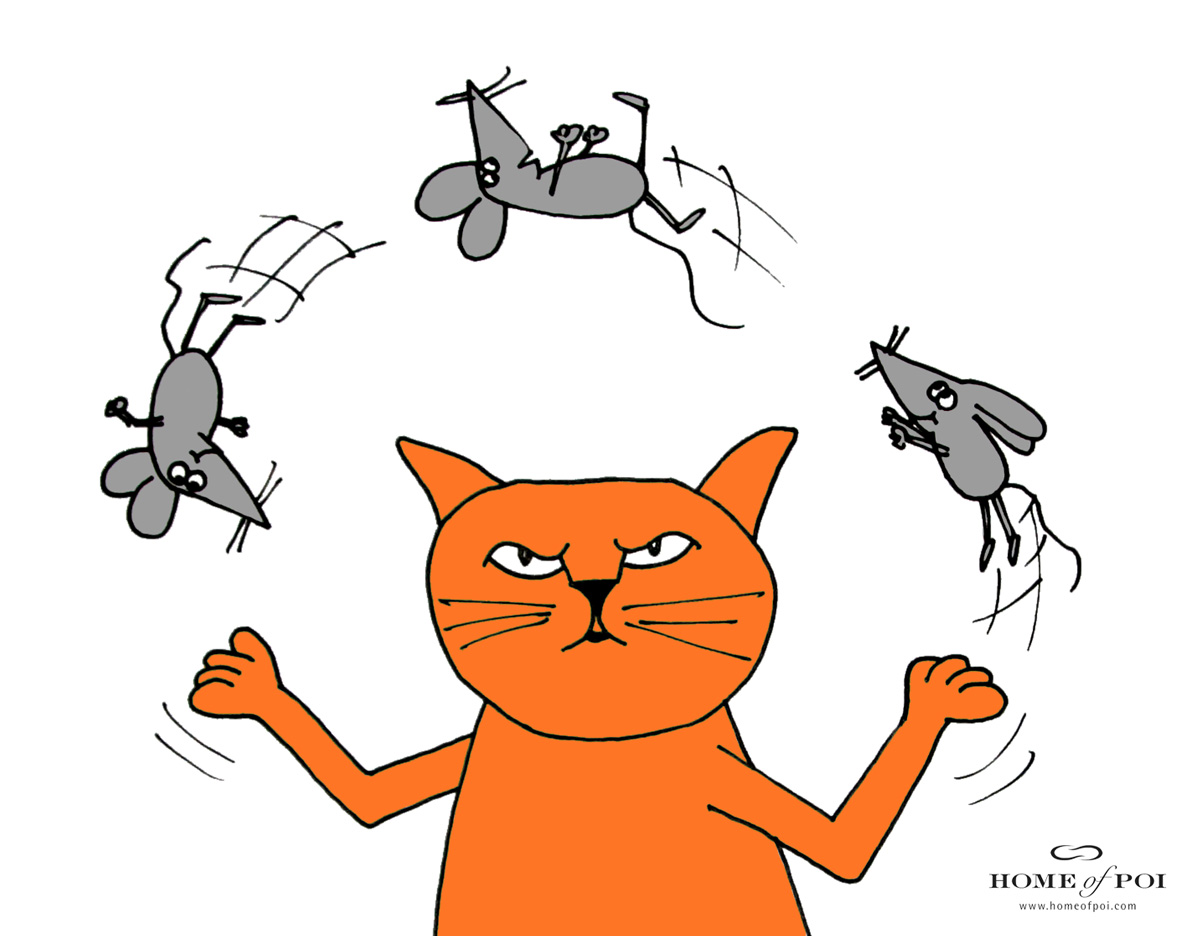
Learn how to juggle.

It will feel like jumping off a cliff~~so don’t overthink it. In fact, don’t think about it at all. Just do it.

You will fail multiple times. You will reach for that needle again and again, but the relief you feel will last a shorter and shorter amount of time.

Step Four: Rinse and Repeat Until You Are Free.

Even telling yourself it’s going to be okay won’t work until you’ve put in the mental gym hours. This isn’t about convincing yourself~~it’s about retraining your brain.

I often tell myself, “don’t be a pussy.” It’s not exactly conventional therapist advice, but it works for me. It reminds me that I have reserves of strength I can tap into at any time. Feel free to try it. Or come up with your own motivational insult.

And just to be clear, this isn’t about ignoring real-world issues. If you’re obsessing about actual problems~~like say, Democracy being on fire, or a Russian asset in the White House~~you should hit the problem directly. Call your representatives, donate, march, vote. As Michelle Obama said to the DNC, DO SOMETHING.

But when it comes to pointless, unanswerable, brain-eating obsessions? Starve them. Train your mind like an athlete. Build your mental muscles. Will it completely and utterly blow chunks? Yes. Will it be worth it? Also yes. What’s better than finally shutting the hell up inside your own head?

And hey, you might finally learn how to juggle.