

The Parent Trap

In the aftermath of tragedies involving severe mental illness, familiar questions arise: Why didn’t people do more? Couldn’t this have been prevented? These questions come from fear, grief, and a powerful need to believe that catastrophic violence is preventable if only the right people act decisively enough.

I write this as a clinical social worker with more than thirty-five years of experience working with severe mental illness and someone who has asked these same questions. Like many others, I was shaken by the deaths of Rob and Michele Reiner. I grew up watching Rob Reiner on All in the Family and later seeing his films—The Princess Bride remains one of my favorites. His work was part of the cultural fabric of my life. Losing him felt unexpectedly personal, not just as a clinician, but as a human being. That sense of shock and familiarity may help explain why so many people are urgently asking how this could have happened. I have also worked with many parents of struggling adult children who feel terribly helpless and guilty for not being able to do more.

But the questions being asked also reveal a profound misunderstanding of how mental health care, civil rights, and the law actually function in the United States today. The system many people imagine—one in which families can compel treatment or place an adult child into long-term psychiatric care—largely no longer exists.

Once an individual turns 18, they are legally an adult. Parents do not retain authority to mandate treatment, confinement, or supervision, no matter how impaired, distressed, or deteriorated that adult may appear. The legal threshold for involuntary psychiatric commitment is deliberately high and narrowly defined. In most jurisdictions, it requires evidence of imminent danger to self or others—not chronic instability, paranoia, psychosis, addiction, or years of frightening behavior.

To be blunt: someone generally must state, clearly and credibly, that they intend to kill themselves or someone else.

This leaves many families trapped in an agonizing position—watching a loved one unravel while being told, again and again, that the legal standard for intervention has not yet been met. It can also leave families quietly terrified of their own family member, with little recourse for protection.

When a family has substantial financial resources, as the Reiners did, the public often assumes they have access to options others do not. In reality, money does not override civil liberties.

Even unlimited funding does not allow parents to force medication compliance, long-term hospitalization, residential placement, or ongoing supervision without consent. Private psychiatric hospitals typically offer only short-term stabilization, not long-term containment. Once discharged, patients are entirely within their rights to stop medication, skip follow-up care, or disengage from the mental health system altogether.

The only theoretical alternative—round-the-clock residential supervision with private staffing—requires the adult’s voluntary participation. Among those suffering from severe mental illness and addiction, that participation is often inconsistent or fleeting at best.

The psychiatric institutions many people imagine were largely dismantled during deinstitutionalization in the 1980s, without adequate replacements. What remains is a fragmented system: few long-term beds, overcrowded state hospitals, facilities unwilling to accept individuals deemed high-risk, and intense pressure for rapid discharge. Even families actively seeking placement are often told there is simply nowhere to send someone.

Privacy laws further compound the problem. Once a child becomes an adult, clinicians cannot share information with parents without written legal consent—even when parents are providing housing, financial support, and daily care. Families can raise concerns, but they may receive no guidance or feedback in return.

From the outside, this can look like denial or passivity. In reality, it is exclusion.

The uncomfortable truth is that the U.S. mental health system is largely reactive rather than preventive. Meaningful intervention typically occurs only after a crime is committed, a serious and credible threat is made, or someone is briefly hospitalized under emergency conditions. Families are then blamed for not acting sooner, even though the system itself forbids early, sustained intervention.

Blame offers psychological comfort. It preserves the belief that tragedy is avoidable if someone, somewhere, simply tried harder. It is also a natural part of grief—the endless, tormenting “If only…” But the reality is far more unsettling: severe mental illness and addiction frequently outstrip love, money, vigilance, and effort.

Instead of asking why families did not do more, a more honest question is this:

Why do families have to wait for imminent danger before help is legally allowed?

Until that question is answered—through policy reform, funding, and a serious reinvention of long-term care—these tragedies will continue. And grieving families will continue to shoulder blame for failures that are not personal, but structural.

During a Christmas episode of All In The Family, Edith, played by Jean Stapleton, is grieving the killing of a gay friend. “I just don’t understand,” she says. Mike, played by Rob Reiner says, “Maybe we’re not supposed to understand everything all at once. Maybe we’re just supposed to understand things a little bit at a time.”

So let’s all resist the urge to rush to judgement. There’s often far more to understand than blame will ever allow.

It’s The Lying, Stupid

What do political gaslighting and personal trauma have in common?

Oh, just about… everything.

In this piece, I connect the dots between chronic lying—by abusers and authoritarian leaders alike—and how those lies rip open old wounds for trauma survivors. 

Recently, a known Trump disciple tried to troll me on Facebook after I commented “Luv our Guv” on a post about Illinois Governor J.B. Pritzker. He responded: “Why?”

So I trolled right back: “Because he’s HOT.”

His only reply: “OMG”—and then? Nothing. No follow-up. No witty comeback. Just a mental blue screen. Total system crash. Because here’s the thing: using facts to argue with a MAGA diehard is like playing chess with a pigeon. It knocks over the pieces, shits on the board, and flies away screaming about Hunter Biden’s laptop.

I work with trauma survivors—people with deep histories of sexual abuse, emotional and physical violence, and catastrophic loss. I’m a survivor myself, which is why I became a therapist. (Not for the wads of cash or the yacht parties—believe me.)

And I’m telling you: today’s political climate is not just chaotic. It’s profoundly triggering for the traumatized among us.

Why? Because of the LIES. The endless, aggressive, easily disprovable, crazy-making lies. A firehose of fabrication, turned on full blast and aimed straight at our sanity.

Trump doesn’t just lie—he diarrheas dishonesty. And his party lines up to wipe his ass and label the steaming, stinking pile of crap “Patriotism!” It’s not just infuriating. It’s re-traumatizing.

In trauma recovery, we have a word for people like that: enablers. The flying monkeys who do the dirty work for the Wicked Witch. The ones who look you in the eye and say: “That never happened.”

Here’s the deeper cut: when someone survives trauma—say, a child who’s molested by a relative—the event itself is devastating. But what truly shatters the soul is what comes after. The silence. The denial. The gaslighting from the very adults who were supposed to protect them. The, “You’re making that up.”

Research shows that survivors who are believed, supported, and protected fare much better over time. And those rare few whose abusers actually take responsibility tend to heal even more fully. But most survivors don’t get that. Not even close.

So when Trump and his enablers lie—relentlessly, shamelessly—it doesn’t just press our buttons. It echoes those original betrayals. And our nervous systems light up like slot machines: hearts racing, chests tightening, palms sweating. Panic. Rage. Numbness. The full trauma jackpot.

So what do we do with all that?

We heal anyway.

There’s no magic button. No neat apology arc. We build the closure we never got. I often tell my clients: If you’ve been hit by a truck, it doesn’t matter whether the driver apologizes or gets away scot-free. You still need surgery. You still have to learn to walk again. And no one else can do that work for you.

We have to stop waiting for the people who hurt us to say, “I’m sorry.” Because most of them are too busy blaming us for being under the truck they ran us over with.

It’s tempting to believe that Trump supporters are just misinformed, hypnotized, trapped in a cult. That someday they’ll snap out of it and finally validate our reality. Just like trauma survivors often cling to the hope that their abusers will one day acknowledge the facts.

The bitter truth is that they know exactly who he is. And they like him that way. For all intents and purposes, they are him. “Woke” is the enemy. Owning the Libs is the mission. The cruelty isn’t a bug—it’s the whole damn app.

Maybe a few will change their tune when they lose their jobs or healthcare. When the shelves go bare or the bills pile up or a loved one is sent to a detention camp patrolled by alligators. But admit they were wrong? Acknowledge the harm they’ve done? Validate your reality?

Puh-lease. Abusers and their enablers rarely do. Many are narcissists and sociopaths, people who literally lack the wiring for empathy or accountability.

And yes, it fucking sucks. But letting them live rent-free in your head sucks much harder.

You already know they’re lying. That’s enough. You don’t need their confession to begin your healing. So stop spinning your wheels trying to make sense of their bullshit.

Just like in trauma recovery, dealing with these triggers requires tools. One process I teach my clients is: Don’t Engage. De-escalate. Distract.

Don’t Engage

Don’t engage with trolls. Don’t argue with people who aren’t operating in good faith. Don’t spike your already-overstimulated nervous system. Hide or block them and walk away.

De-escalate

Breathe. I like 7-8-9 breathing. Inhale through your nose for 7 counts. Hold it for 8, and exhale slowly through your mouth for 9. This activates your vagus nerve, helps calm your system, and brings you back to the present.

Distract

Yes, really. Distraction—simple, elegant, and often the best way to deal with just about anything. Go for a hike or do some kickboxing. Rearrange your furniture. Make a soufflé. Watch old comedy clips. Be with people who help you laugh at the absurdity—and hold space for the pain. It’s not avoidance—it’s medicine.

You can absolutely fight the gaslight when you have the bandwidth. But choose action over obsession—protest, write letters and postcards, phone bank, give money to worthy organizations—because doom-scrolling has never helped anyone heal.

And healing is the goal.

And when you’re tired, rest. Sit back and let someone else take the wheel. That’s not quitting—that’s strategy. That’s wisdom.

These are your tools. This is your power. This is how we take our lives back.

Maybe how we take our democracy back.

And that’s no lie.

Don’t Be A Pussy


Lately, I’ve had an “unknown” gnawing on my brain like a pack of raccoons in a KFC dumpster. No answers, no closure, just an endless loop of what ifs and maybe thens driving me batshit. And because I have the self-preservation instincts of a feral cat, I know that any attempt to actually get an answer would be at best dumb and, at worst, an unhinged act of self-sabotage.

So my only option? Get this fucking nonsense out of my head.

If my brain is powerful enough to keep me stuck in a death-spiral of existential doom, surely it’s powerful enough to drag me out of it, right? At least that’s my theory. But I know one thing for sure: chasing answers, seeking reassurance, and mentally running in circles does not work. It’s like trying to put out a fire by throwing gasoline at it while screaming, “Why is this happening to me?”

The best use of my brain is, actually, not to think about the problem at all.

Make no mistake~~obsessive thinking is a universal human affliction. We all get stuck on things we can’t control. If we had answers, we’d stop obsessing~~but life doesn’t always spit those out like a Pez dispenser. Some people have actual neurological conditions like OCD and I’m not here to suggest they can fix it with a good attitude. Their brains are pre-programmed for obsession and they likely need medical help to overcome their painful circular thinking. It’s a whole different thing.

For the rest of us? We need to train our brains like we train our bodies. For example, people tell me they “can’t meditate” because they tried it once and it didn’t work. Jesus Christ, that’s like saying you tried running a marathon once and collapsed after a couple of blocks, so clearly you are genetically incapable of running. Meditation is called a practice for a reason. It’s supposed to be soul-suckingly difficult.

Think about Olympic athletes. They wake up at stupid o’clock every day, give up normal human joys like eating pizza and bingeing crap on Netflix, training like lunatics to win a shiny medal. That level of discipline is why they stand on podiums in front of cheering crowds, and we stand in our kitchens at 2 a.m. eating shredded cheese out of a bag.

So if you’ve allowed your brain to run amok for years, just as if you’ve let your body go to hell~~having done not one single sit-up since the Carter administration~~then you have to actually put in the mental reps. And it’s going to be waaaaaay uncomfortable. And it won’t work the first, fifteenth or eleventy-billionth time. But if you keep going, one day, miraculously….it will.

So how do you do this?

Step One: Get Comfortable With Being Uncomfortable.

Because it’s going to suck big ones. You’re not allowed to do your usual obsessive rituals~~blabbing nonstop about the problem, bugging the shit out of your friends, family, hairdresser, and strangers on the train~~or harassing Chat GPT for psychic-level insight. You need to actually sit there in your discomfort, doing absolutely nothing. And yeah, people WILL start to avoid you if you keep cornering them with your crazy, which only gives you something else to obsess over.

Step Two: Rewire Your Brain.

At first, your old obsessive thought patterns will dominate, like a record with a deep groove the needle keeps falling into. But the more you refuse to engage, the more that groove flattens out and disintegrates. Do not rant to your therapist about it. Do not read self-help articles that confirm what you already know. Do not frantically consult Doctor Google. Stay off Chat GPT. You will be wasting your time and misusing your marvelous brain.

And yes, you will go through withdrawal. You will sweat and panic. You will crave an answer the way a junkie craves a hit. You will be ready to trade your soul for a single scrap of certainty. But. Do. Not. Reach. For. That. Needle. At least give it the old college try.

Step Three: Distract Yourself Like Your Life Depends On It.

Do literally anything else. Alphabetize your spices. Take a walk. Call a friend and DO NOT talk about your problem. Clean your house. Paint your bathroom. Offer to paint someone else’s bathroom. Take up archery. Volunteer somewhere.

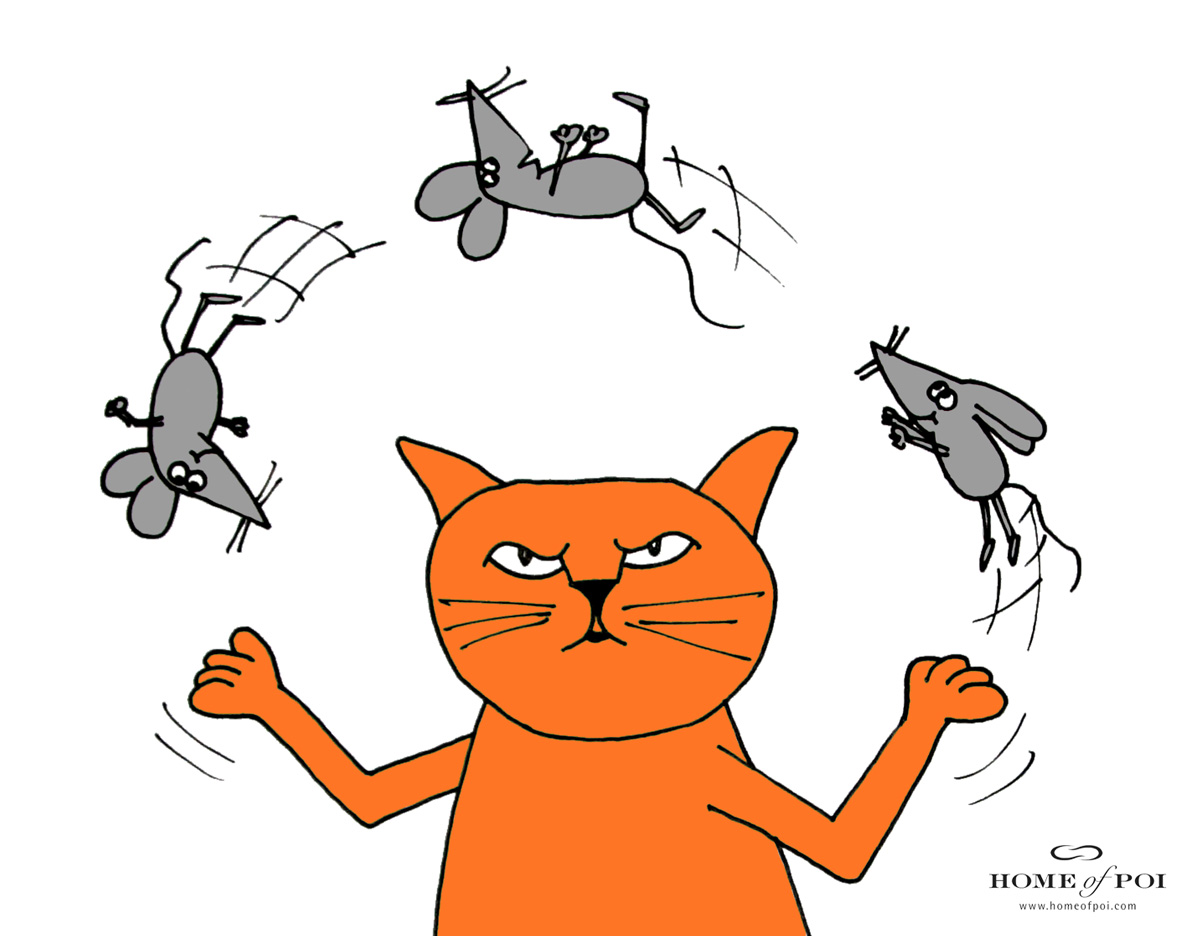
Learn how to juggle.

It will feel like jumping off a cliff~~so don’t overthink it. In fact, don’t think about it at all. Just do it.

You will fail multiple times. You will reach for that needle again and again, but the relief you feel will last a shorter and shorter amount of time.

Step Four: Rinse and Repeat Until You Are Free.

Even telling yourself it’s going to be okay won’t work until you’ve put in the mental gym hours. This isn’t about convincing yourself~~it’s about retraining your brain.

I often tell myself, “don’t be a pussy.” It’s not exactly conventional therapist advice, but it works for me. It reminds me that I have reserves of strength I can tap into at any time. Feel free to try it. Or come up with your own motivational insult.

And just to be clear, this isn’t about ignoring real-world issues. If you’re obsessing about actual problems~~like say, Democracy being on fire, or a Russian asset in the White House~~you should hit the problem directly. Call your representatives, donate, march, vote. As Michelle Obama said to the DNC, DO SOMETHING.

But when it comes to pointless, unanswerable, brain-eating obsessions? Starve them. Train your mind like an athlete. Build your mental muscles. Will it completely and utterly blow chunks? Yes. Will it be worth it? Also yes. What’s better than finally shutting the hell up inside your own head?

And hey, you might finally learn how to juggle.