In My Therapy Chair, I see a Nation in Grief

Between January 1st and 31st of 2026, approximately eight people were either shot by I.C.E. agents or died in I.C.E. detention. Renee Nicole Goode and Alex Pretti were killed in broad daylight. The others—Luis Gustavo Núñez Cáceres, Geraldo Lunas Campos, Víctor Manuel Díaz, Parady La, Luis Beltrán Yáñez–Cruz, and Heber Sánchez Domínguez, died in custody. It is sickening how quickly tragedies like these are flattened into headlines, speculation, and political sound bites. But before their names are absorbed into background noise, it deserves to be spoken plainly: many lives have been ended senselessly and violently, and many more families are being pulled into irreversible grief.

For many Americans, especially those already living with fear, deaths like these are not abstractions or talking points. They live in the body. They sharpen existing dread. They confirm a growing sense that our safety is increasingly fragile.

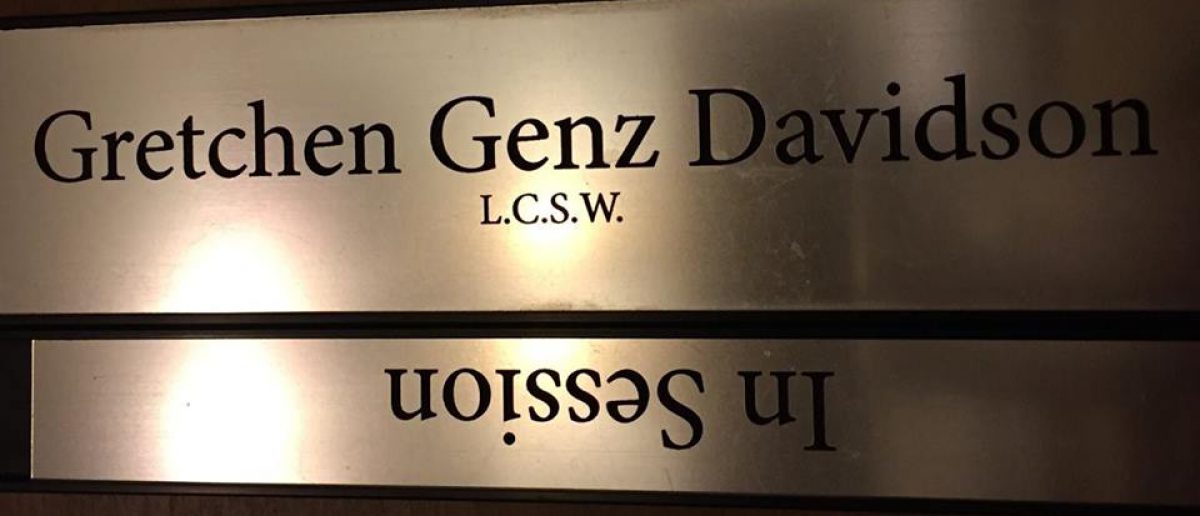
In my work as a therapist, I see how national events like this don’t remain “out there.” They follow people into the room with me, shaping what they fear, what they plan for, and how much of the future they feel able to imagine.

As a therapist in the Chicagoland area, I’m used to helping people navigate heartbreak, loss, and conflict. But since Trump was re-elected, our sessions have taken a darker turn. My clients aren’t just anxious about relationships—some are abjectly terrified of them or their loved ones being detained, deported, or silenced.

Therapy has now become a place where Americans process not just personal trauma, but national collapse.

I felt guilty for missing the No Kings rally on October 18, 2025 as well as several subsequent marches. They are often scheduled on Saturdays, and Saturdays are workdays for me. Therapists tend to work many evenings and weekends so we can see people who can’t come during the 9:00 – 5:00 hours.

The clients who sat across from me that day weren’t at the rally either, for many reasons: autoimmune disease, mobility issues, caretaking responsibilities—and, most painfully, fear of being targeted.

When my last client broke down in tears, terrified that she or her family might be detained, I realized my role that day wasn’t in the streets. It was in that chair, supporting those who live with fear every single day—people who sense the shadow of authoritarianism not just as a talking point, but as a daily threat.

Born and raised in Chicago, she told me she now fears walking her dog in her own neighborhood. One day, she saw a vehicle with darkened windows and men in face masks idling at the corner, and her body went numb with terror. Her nightmare is simple and devastating: being detained and her beloved dog left abandoned in the street—lost, alone, frightened, and at risk. I thought about my cats. What would happen to them if I were taken away without warning?

She also worries about her elderly father, a longtime U.S. citizen born in Mexico, who might be “disappeared” from the local drugstore parking lot—a common staging area for ICE—while picking up a prescription for her mother. We both paused, stunned that we were even having that conversation—in 2025, in a quiet college town just north of Chicago. Two Americans strategizing about how to keep a family member safe from his own government.

These are the conversations happening in therapy now. Where we once talked about family dysfunction, we now talk about national dysfunction.

I sat there, horrified. As a 70-year-old white woman, I’m not completely safe—but I am far safer than someone with nothing more than a Hispanic surname. My fear is cushioned by privilege, and I know it.

Some of my clients have reached a grim acceptance. They understand things may get worse before they get better. But they’ve chosen to stay—to live their lives, find moments of joy, and resist in the ways they can.

Others are still in denial. Some are furious. Many are bargaining, parsing headlines like tea leaves, debating what Democrats did wrong and what they could still fix.

Collectively, we’re grieving the country we thought we lived in—where decency and democracy once felt like birthrights, not privileges that could vanish overnight.

Many months ago, my aunt and I visited my hometown in the far west suburbs. Even in the 1950s and 60s, it had a large Hispanic population. My first big crush was on a boy named Fernando. We drove through the old neighborhoods, past the city pool and my grade school, before stopping at my grandparents’ house—the heart of my childhood.

The yard, once plain grass, is now alive with bushes, flowers, statues, and colorful pinwheels. A few cars sat in the driveway. I parked across the street and hopped out to take a couple of photos. As I snapped away, a woman jumped from one of the cars, demanding to know what I was doing. She looked Latina. My heart sank—I had frightened her. I went into explanation overdrive, offering my name, even my driver’s license, anything to prove I wasn’t a threat—just a sentimental old fool on a trip down memory lane. My aunt chimed in, offering my grandparents’ names and the dates they lived there. I described the layout of the rooms, still burned into my memory.

She relaxed eventually, and we chatted a bit. But as I drove away, I couldn’t shake the unease. I had scared her unintentionally—but she had every reason to be afraid. That anyone in this country lives like that—constantly vigilant, even on their own front lawn—is an indictment of what we’ve become.

I’m not as far along in my grief as some of my clients. I cycle through the stages: shock, anger, despair, fleeting hope. Some days I want to fight; others, I want to hide. But what’s hardest is realizing how much hatred was always here, hiding in plain sight, now emboldened by power. It’s abuse on a national scale—gaslighting raised to a governing principle.

I still feel guilty for not marching. But maybe being in my chair that day was its own form of resistance. Seven million Americans turned out for the second No Kings March—a surge from the first rally. Future marches will be even bigger.

And if I can’t be there, I’ll be here. Because the front lines aren’t only in the streets. They’re in classrooms, clinics, kitchens—and therapy rooms—where people are quietly helping one another stay grounded, stay human, and not surrender entirely to despair.

When people like the aforementioned are killed, through direct violence or abject abuse and neglect, the loss ripples far beyond the immediate circle of grief. It enters into all of us. My work now—our work—is to make room for that grief without letting it harden into numbness or fear. To bear witness. To help people hold on to the fragile, stubborn belief that this country can still choose something better than what it is becoming.

This essay was written in the days following the second No King’s rally but updated after the killing of Renee Nicole Good.

It’s The Lying, Stupid

What do political gaslighting and personal trauma have in common?

Oh, just about… everything.

In this piece, I connect the dots between chronic lying—by abusers and authoritarian leaders alike—and how those lies rip open old wounds for trauma survivors. 

Recently, a known Trump disciple tried to troll me on Facebook after I commented “Luv our Guv” on a post about Illinois Governor J.B. Pritzker. He responded: “Why?”

So I trolled right back: “Because he’s HOT.”

His only reply: “OMG”—and then? Nothing. No follow-up. No witty comeback. Just a mental blue screen. Total system crash. Because here’s the thing: using facts to argue with a MAGA diehard is like playing chess with a pigeon. It knocks over the pieces, shits on the board, and flies away screaming about Hunter Biden’s laptop.

I work with trauma survivors—people with deep histories of sexual abuse, emotional and physical violence, and catastrophic loss. I’m a survivor myself, which is why I became a therapist. (Not for the wads of cash or the yacht parties—believe me.)

And I’m telling you: today’s political climate is not just chaotic. It’s profoundly triggering for the traumatized among us.

Why? Because of the LIES. The endless, aggressive, easily disprovable, crazy-making lies. A firehose of fabrication, turned on full blast and aimed straight at our sanity.

Trump doesn’t just lie—he diarrheas dishonesty. And his party lines up to wipe his ass and label the steaming, stinking pile of crap “Patriotism!” It’s not just infuriating. It’s re-traumatizing.

In trauma recovery, we have a word for people like that: enablers. The flying monkeys who do the dirty work for the Wicked Witch. The ones who look you in the eye and say: “That never happened.”

Here’s the deeper cut: when someone survives trauma—say, a child who’s molested by a relative—the event itself is devastating. But what truly shatters the soul is what comes after. The silence. The denial. The gaslighting from the very adults who were supposed to protect them. The, “You’re making that up.”

Research shows that survivors who are believed, supported, and protected fare much better over time. And those rare few whose abusers actually take responsibility tend to heal even more fully. But most survivors don’t get that. Not even close.

So when Trump and his enablers lie—relentlessly, shamelessly—it doesn’t just press our buttons. It echoes those original betrayals. And our nervous systems light up like slot machines: hearts racing, chests tightening, palms sweating. Panic. Rage. Numbness. The full trauma jackpot.

So what do we do with all that?

We heal anyway.

There’s no magic button. No neat apology arc. We build the closure we never got. I often tell my clients: If you’ve been hit by a truck, it doesn’t matter whether the driver apologizes or gets away scot-free. You still need surgery. You still have to learn to walk again. And no one else can do that work for you.

We have to stop waiting for the people who hurt us to say, “I’m sorry.” Because most of them are too busy blaming us for being under the truck they ran us over with.

It’s tempting to believe that Trump supporters are just misinformed, hypnotized, trapped in a cult. That someday they’ll snap out of it and finally validate our reality. Just like trauma survivors often cling to the hope that their abusers will one day acknowledge the facts.

The bitter truth is that they know exactly who he is. And they like him that way. For all intents and purposes, they are him. “Woke” is the enemy. Owning the Libs is the mission. The cruelty isn’t a bug—it’s the whole damn app.

Maybe a few will change their tune when they lose their jobs or healthcare. When the shelves go bare or the bills pile up or a loved one is sent to a detention camp patrolled by alligators. But admit they were wrong? Acknowledge the harm they’ve done? Validate your reality?

Puh-lease. Abusers and their enablers rarely do. Many are narcissists and sociopaths, people who literally lack the wiring for empathy or accountability.

And yes, it fucking sucks. But letting them live rent-free in your head sucks much harder.

You already know they’re lying. That’s enough. You don’t need their confession to begin your healing. So stop spinning your wheels trying to make sense of their bullshit.

Just like in trauma recovery, dealing with these triggers requires tools. One process I teach my clients is: Don’t Engage. De-escalate. Distract.

Don’t Engage

Don’t engage with trolls. Don’t argue with people who aren’t operating in good faith. Don’t spike your already-overstimulated nervous system. Hide or block them and walk away.

De-escalate

Breathe. I like 7-8-9 breathing. Inhale through your nose for 7 counts. Hold it for 8, and exhale slowly through your mouth for 9. This activates your vagus nerve, helps calm your system, and brings you back to the present.

Distract

Yes, really. Distraction—simple, elegant, and often the best way to deal with just about anything. Go for a hike or do some kickboxing. Rearrange your furniture. Make a soufflé. Watch old comedy clips. Be with people who help you laugh at the absurdity—and hold space for the pain. It’s not avoidance—it’s medicine.

You can absolutely fight the gaslight when you have the bandwidth. But choose action over obsession—protest, write letters and postcards, phone bank, give money to worthy organizations—because doom-scrolling has never helped anyone heal.

And healing is the goal.

And when you’re tired, rest. Sit back and let someone else take the wheel. That’s not quitting—that’s strategy. That’s wisdom.

These are your tools. This is your power. This is how we take our lives back.

Maybe how we take our democracy back.

And that’s no lie.

Pretty Is As Pretty Does

I once had a client who felt ambivalent about her fiancé because, she sheepishly admitted, he wasn’t as good-looking as her friends’ partners. She said he was a “really good guy,” their sex life was fulfilling, and she found him very attractive. But despite my gentle efforts to help her challenge her own thinking, she called off the engagement. In hindsight, it was probably the right choice~~she didn’t feel strongly enough about the man to set aside her concerns about appearance, or perhaps she needed more confidence in herself. Either way, the fiancé deserved better.

When working through relationship indecision with clients, I remind them that no one will have everything they want. There will always be one or two things that aren’t ideal. The goal is to identify what’s non-negotiable. If most things about someone are good and the flaws aren’t dealbreakers, that could be a great match. Perfection isn’t even on the table.

Dealbreakers vary from person to person. Some people can’t tolerate smoking, messiness, or low income. Others~~like my former client~~might care more about appearances. But real dealbreakers are traits that will ruin your life over time: violence, untreated addiction, dishonesty, emotional immaturity, cruelty, abuse, infidelity, or lack of empathy, to name a few.

Dealbreakers are the qualities you know you can’t live with and still be happy~~or healthy.

That brings me around to Donald Trump. Dealbreakers~~he’s got a few. He has mocked disabled individuals and the military. He didn’t discourage his January 6th mob from chanting about hanging Mike Pence. He’s a pathological liar, convicted felon, and an adjudicated sexual predator, with documented racism, misogyny, violent ideation, and blatant authoritarian intent. He stoked a brutal insurrection, stole top-secret government documents, and tried to keep them. He was twice impeached, cheated on all three wives, and mental health experts say he exhibits the criteria for narcissistic and antisocial personality disorders~~along with signs of dementia.

And that’s just a partial list of his greatest hits.

If these aren’t dealbreakers for you, I have to ask: why not? Don’t you feel the Category 5 winds of a thousand red flags blowing you off your feet? Have friends and family, people you respect, not practically shouted their objections into your face?

How do you imagine a good outcome tied to someone like this? Please, help me understand.

His opponent may not check all your boxes, and you might not agree with every policy. But she hasn’t mocked the disabled, led a coup, or vowed to end the Constitution. She doesn’t have a criminal record or display narcissistic or psychopathic tendencies. She supports minority rights and respects the rule of law. Isn’t choosing someone flawed but principled the better option? In four years, you’ll have another chance to elect someone who better reflects your beliefs and has a shred of decency. But this election isn’t a relationship you can walk away from. One way or another, you must choose between the two.

Over the last nine years, as Trump has lived rent-free in our minds, I have traveled abroad five times. People in other countries told me the U.S. was a laughingstock under Trump, and they fear his return because it affects more than just us. It’s like watching a beloved friend or family member with a toxic partner~~helplessly standing by, hoping they’ll wake the hell up before the damage is beyond repair.

If Trump were still a Democrat and the Republican candidate were Liz Cheney or Adam Kinzinger~~principled leaders I usually disagree with on policy~~I could still see voting for them. Because Trump presents dealbreakers that are unbelievable, undeniable, unthinkable~~BIGLY.

I was going to say I’m no expert on brainwashing~~one of the ways I see Trump maintaining his unfathomable support, with a lot of help from Fox News~~but then, I remembered: I AM. For 25-plus years I’ve thoroughly studied narcissism. I also know brainwashing firsthand, having been manipulated by a former partner.

My family and friends were astonished by how quickly this intelligent, insightful, educated therapist lost her sense of objective reality to someone who turned out to be highly sociopathic and narcissistic. I’ll never forget sitting at the Thanksgiving table, my family gathered around, and announcing who I had voted for in that election. My mother’s mouth dropped open, and a flash of anger crossed her face. Being a lady, she kept what I’m sure were some spicy thoughts to herself. But at one point, she couldn’t help asking “What are you doing with such a loser?”

Of course, I defended him, but deep down, a seed of shame began to take root.

Fortunately, I woke up. It took some doing, but I got out before my brain had been washed clean of any semblance of my true self. The shame of having been so utterly hoodwinked still sticks to me sometimes~~but it beats the alternative.

Make no mistake; brainwashing is what narcissists do best, through gaslighting, manipulation and projection. I’ve worked with people who were in narcissistic relationships for so long they never found their way back to themselves. Those who did paid a steep price, but not as steep as those who didn’t. Gaslighting erodes your sense of reality: “That never happened.” “I never said that.” Manipulation shifts blame, plays the victim, lies, denies, coerces, insults, name calls, dominates the conversation, moves the goalposts (like killing a bi-partisan bill to deny an opponent a win), exploits and backstabs.

Projection? If Trump accuses someone of it, you can bet your bottom dollar he’s doing it himself. Remember his fear-mongering about AI and crowd sizes?

When your life is dominated by a sociopathic narcissist, the psychological damage runs deep. After Trump was elected in 2016, I joked that I had “PTTD”~~Post Traumatic Trump Disorder. I didn’t know how true that flip comment would become. Today, many of us live with Complex Post Traumatic Stress Disorder, (CPTSD) from a steady diet of chaos, gaslighting, and manipulation.

The toll isn’t abstract. Chronic stress leads to depression, anxiety, high blood pressure, headaches, and digestive issues. Long-term, it can contribute to the development and progression of cancer, autoimmune diseases, and more. Living like this is unsustainable, but many people stay in bad situations~~like abuse victims clinging to the highs while tolerating the lows. Been there, done that.

Cognitive dissonance kicks in: when beliefs and actions don’t align, people either change their behavior or retreat into denial to ease the discomfort. Too often, they choose denial. Until disaster strikes. As it inevitably will.

I can’t even fathom the emotional damage inflicted on children separated from their families during the cruel Trump years~~or the fear and anguish felt by their parents. It breaks my heart that so many people live in terror of having their rights stripped away. These people are your friends, colleagues, and family members. I work with abuse survivors whose trauma is triggered daily by seeing a sexual predator deny his victims and walk free. I grieve for the women who have died under draconian abortion bans, and the unimaginable pain their families endure.

As a therapist, I have never seen the level of existential dread I see today~~the constant questions, “Are we going to be okay?” “What kind of country are we leaving for our children and grandchildren?”

The demand and need for mental health services has never been higher and burnout among professionals is at an all-time high. Something has to give.

I don’t know what happened to the woman who left the fiancé she deemed not quite handsome enough. But recently, I saw Trump tell a rally crowd,  “I’m much better looking than Kamala! Much better looking!” They roared with approval.

And among my decidedly judgmental thoughts about his assertion, I recalled what I had shared with my client: Looks fade, character doesn’t. Or, as my mother would say, Pretty is as pretty does.

If character is destiny, we know exactly where this road leads~~and it’s nowhere pretty.